







Home > Shop > HMS Victory Cross Section Display Ship Model (Premier Range) – Premier Ship Models
Description

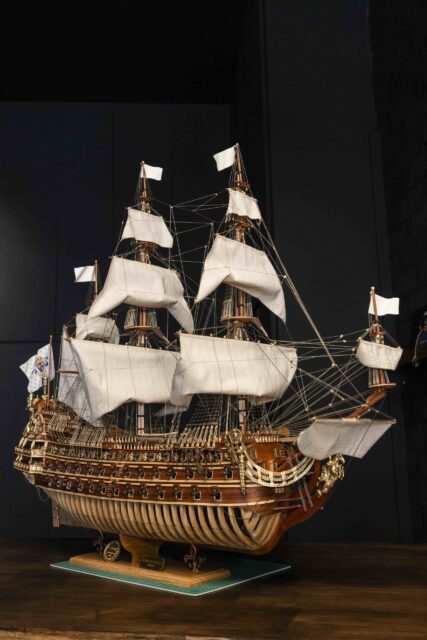
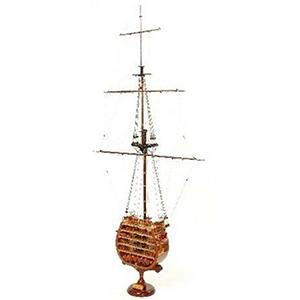
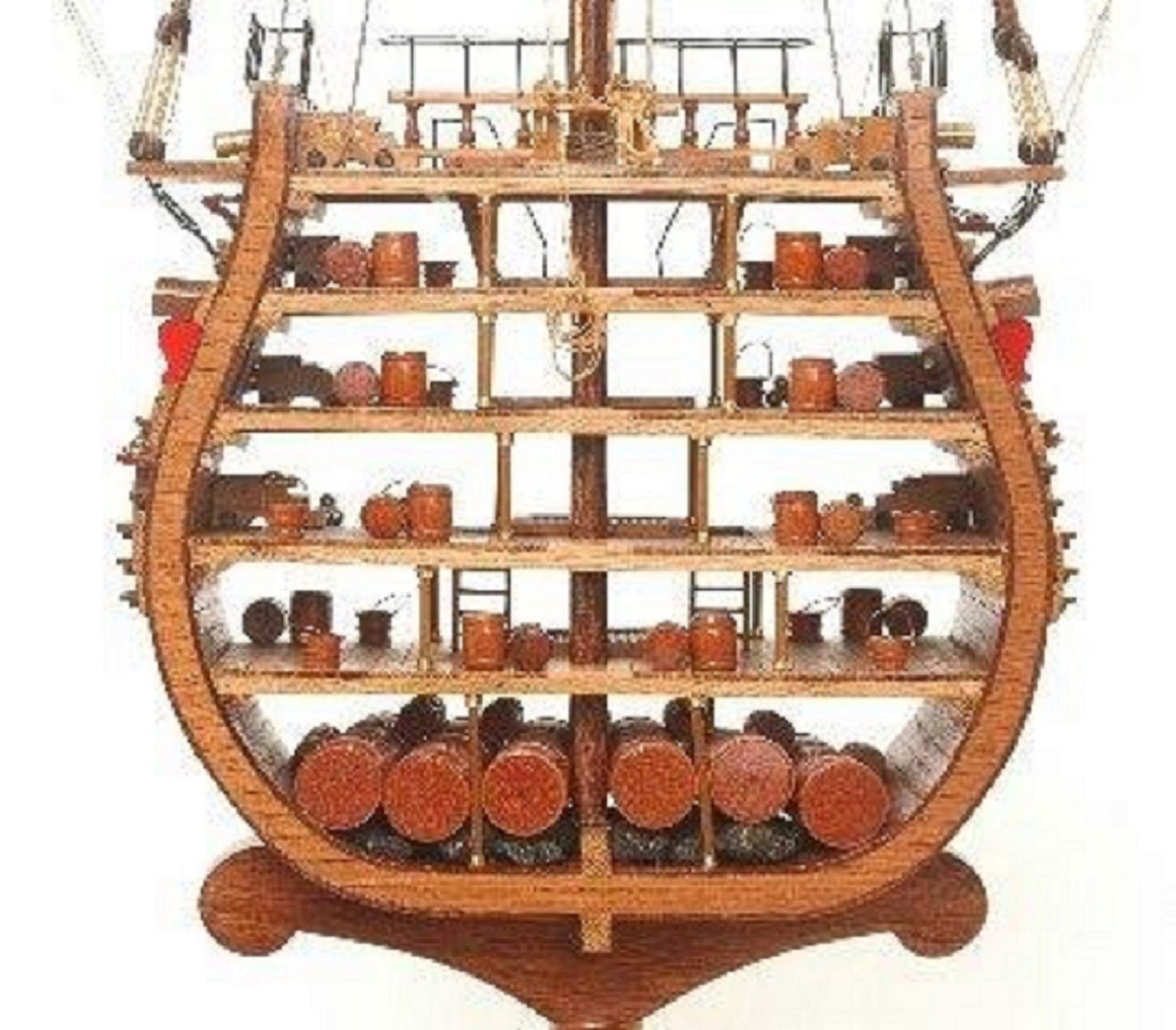
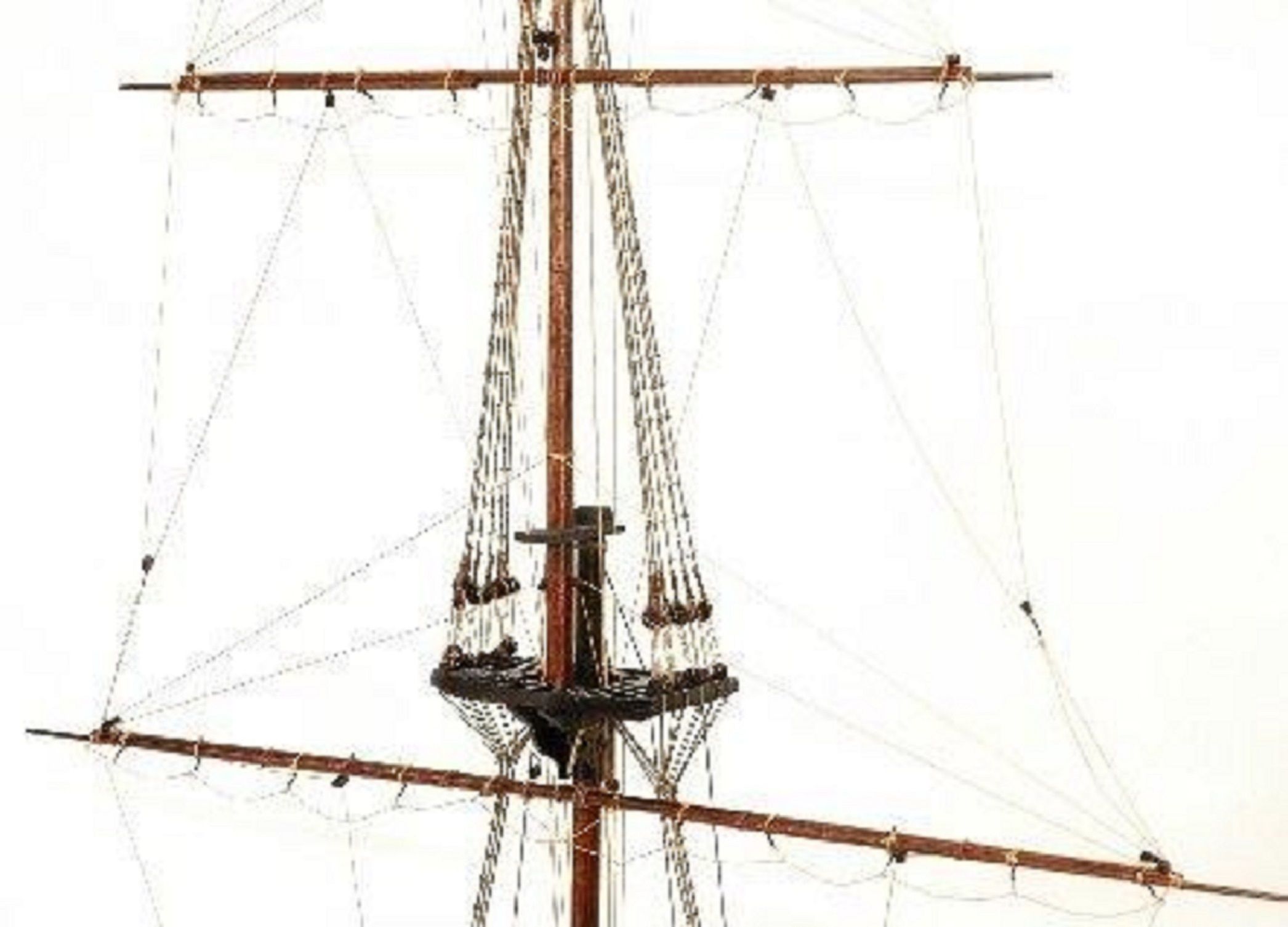
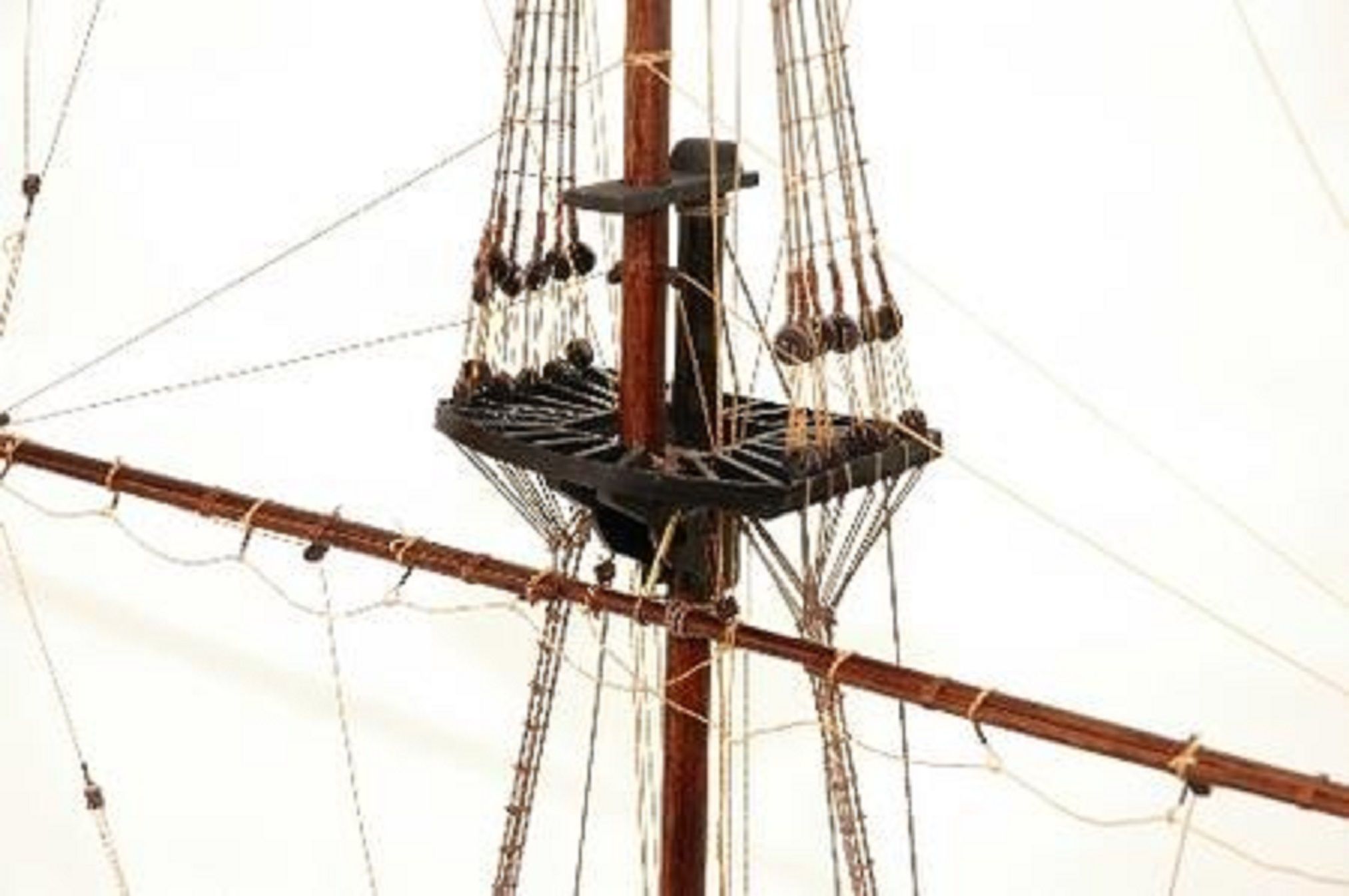
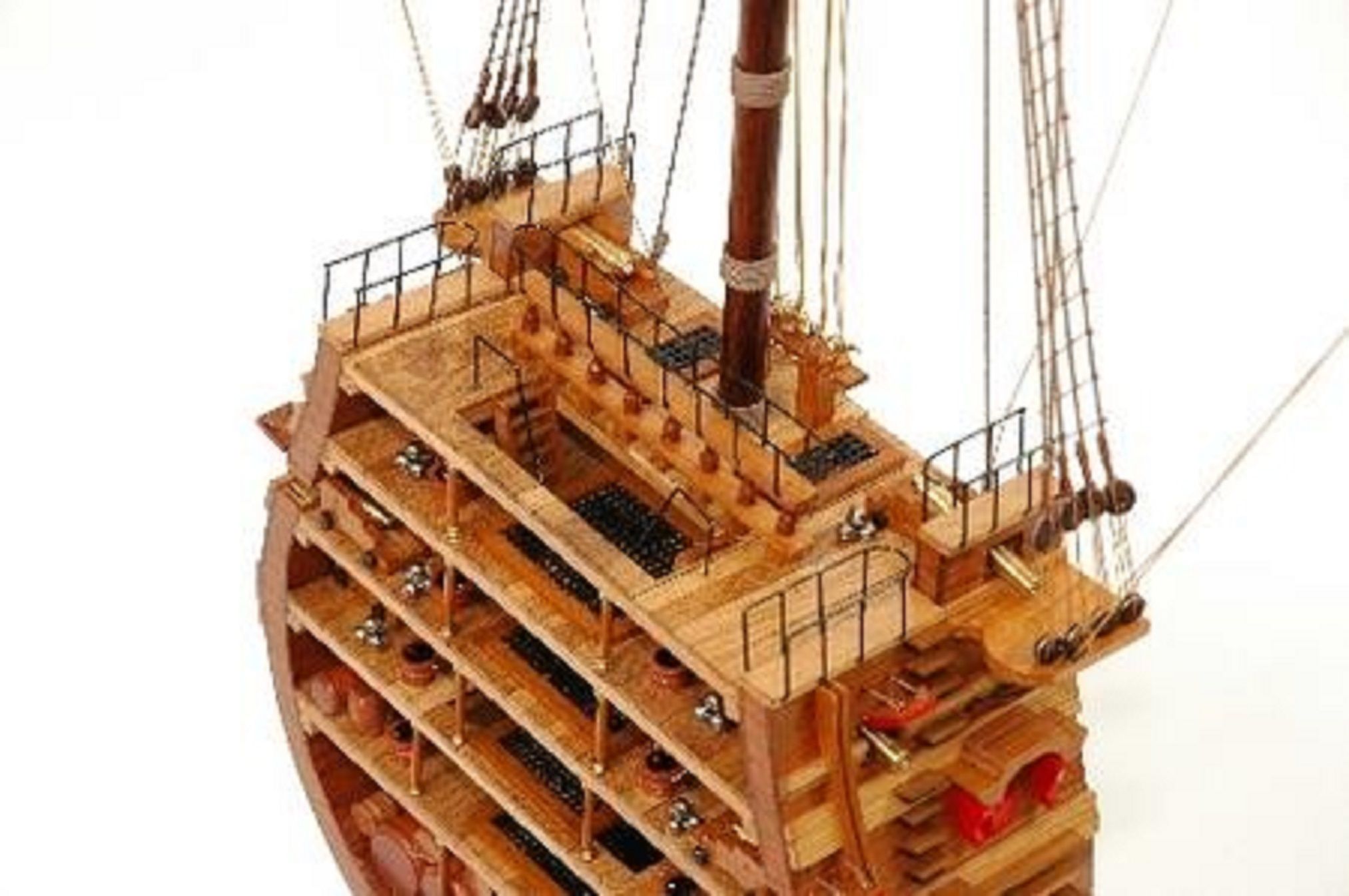
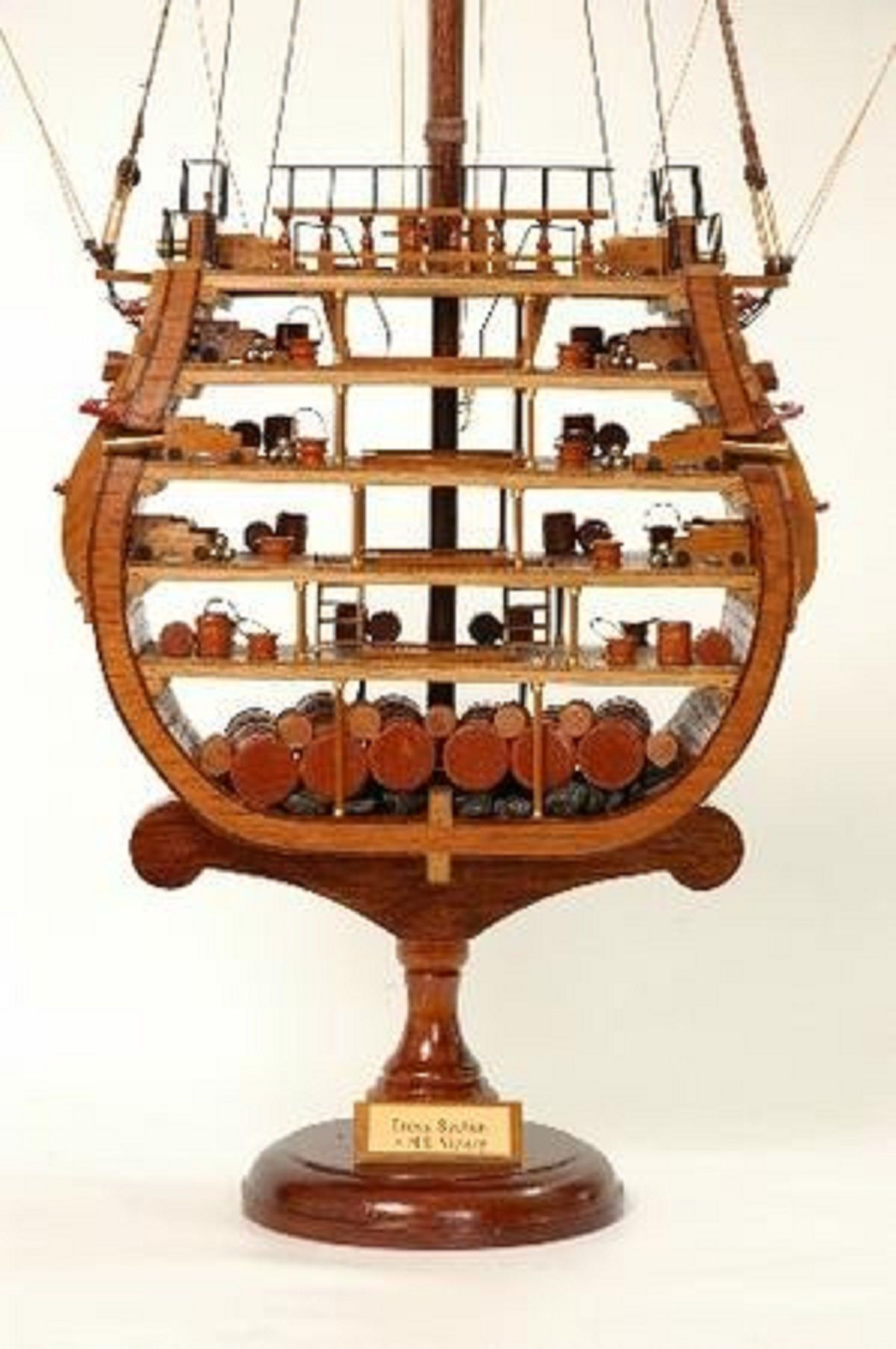
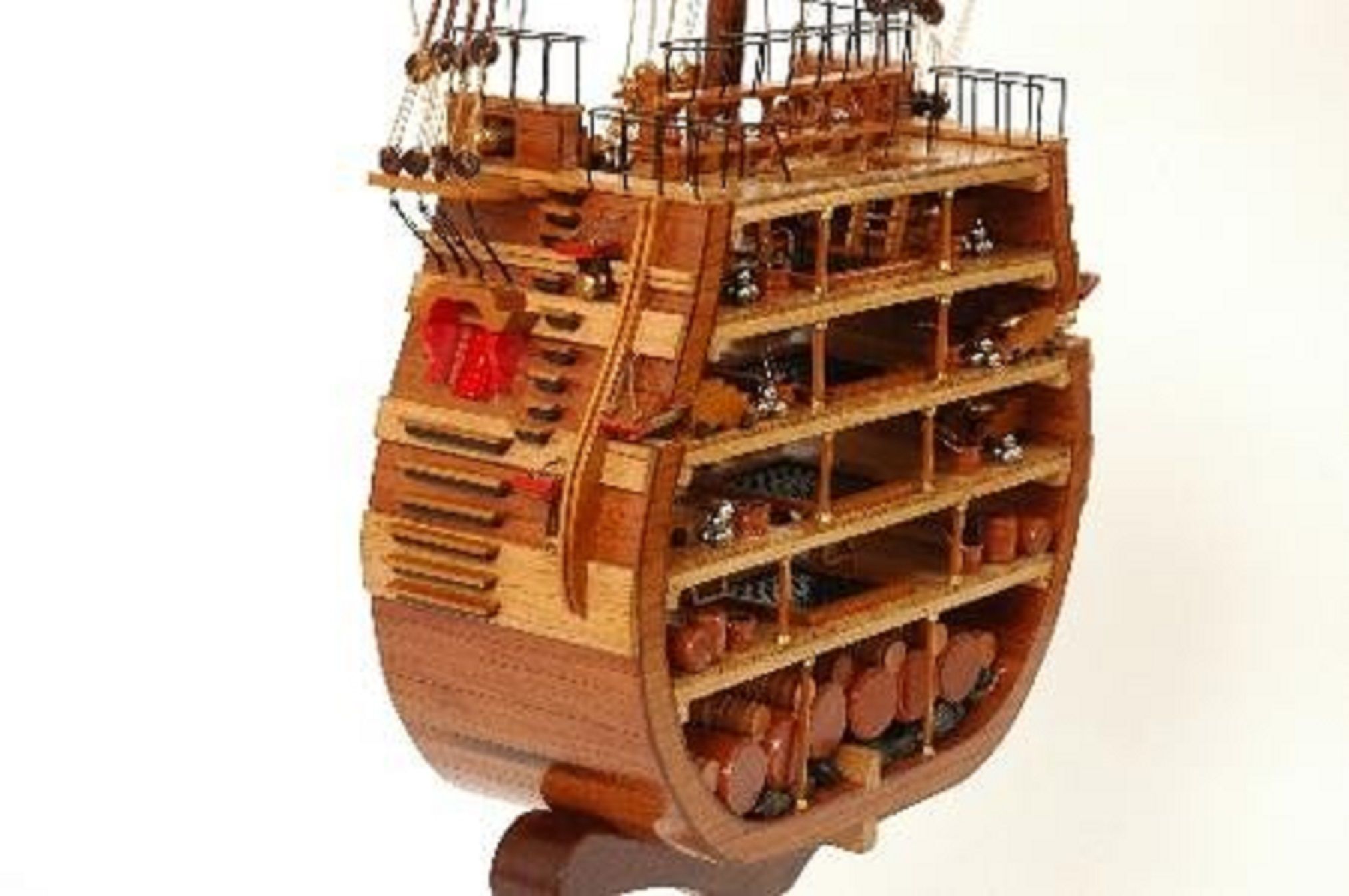
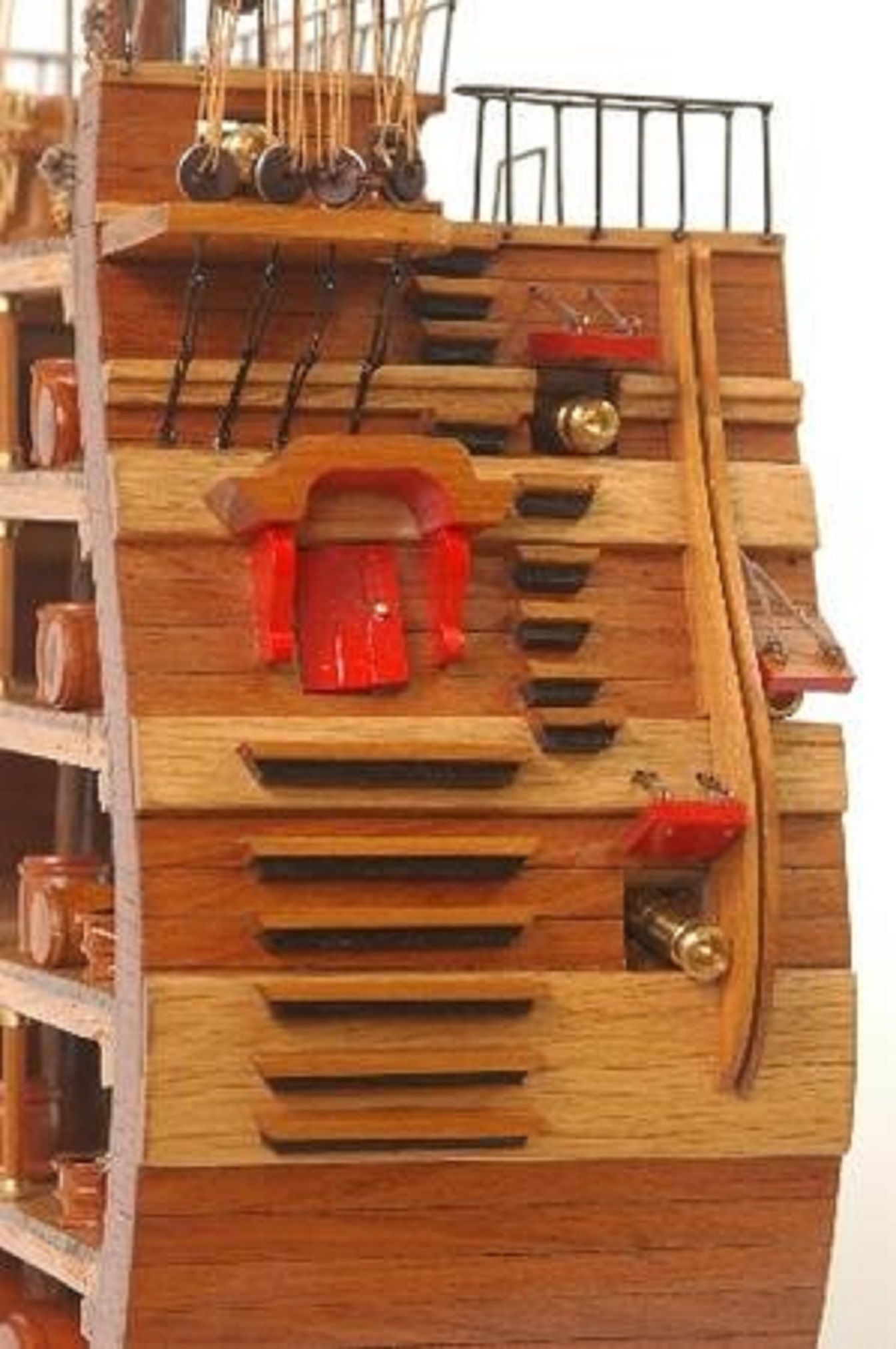
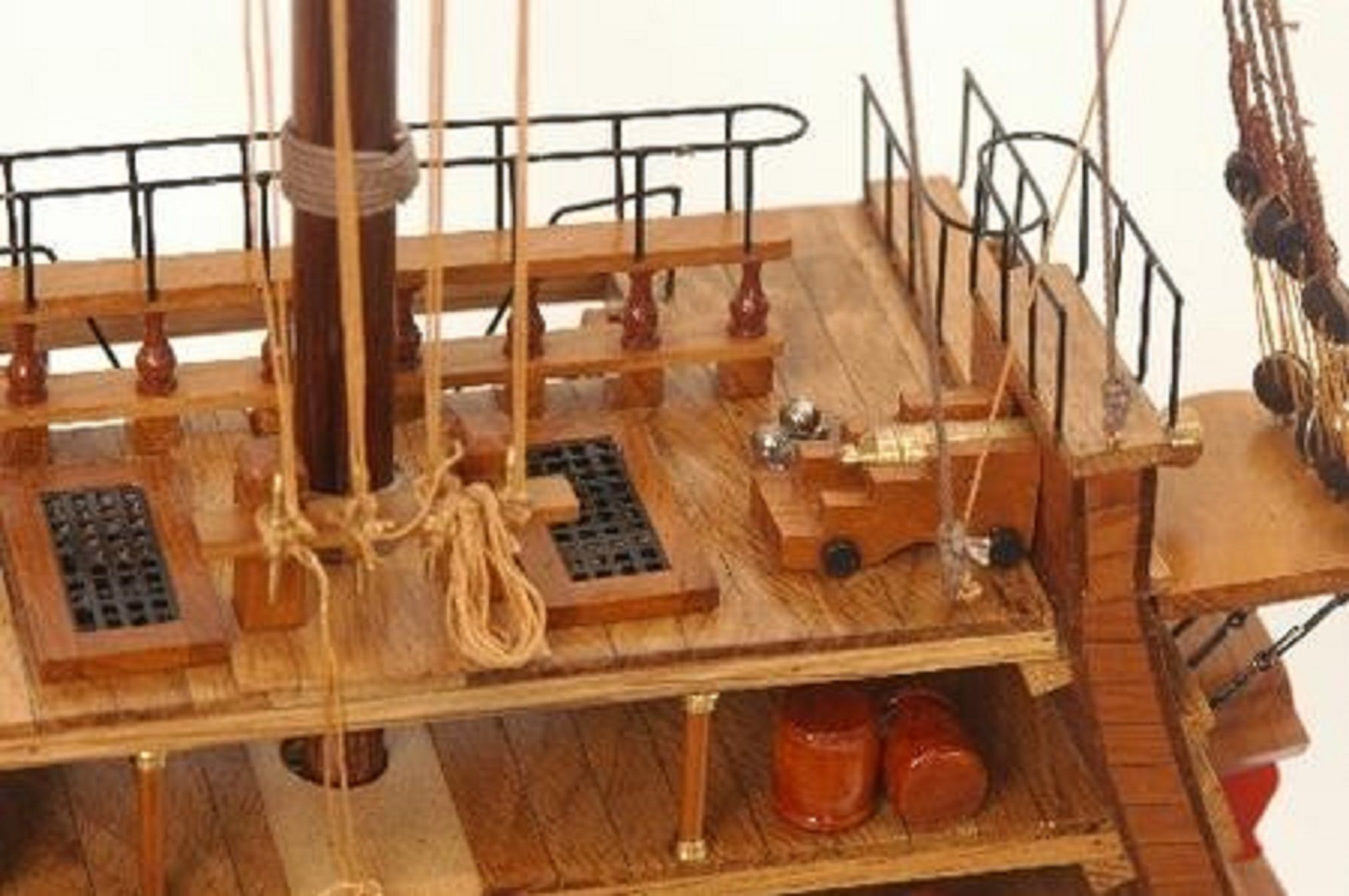
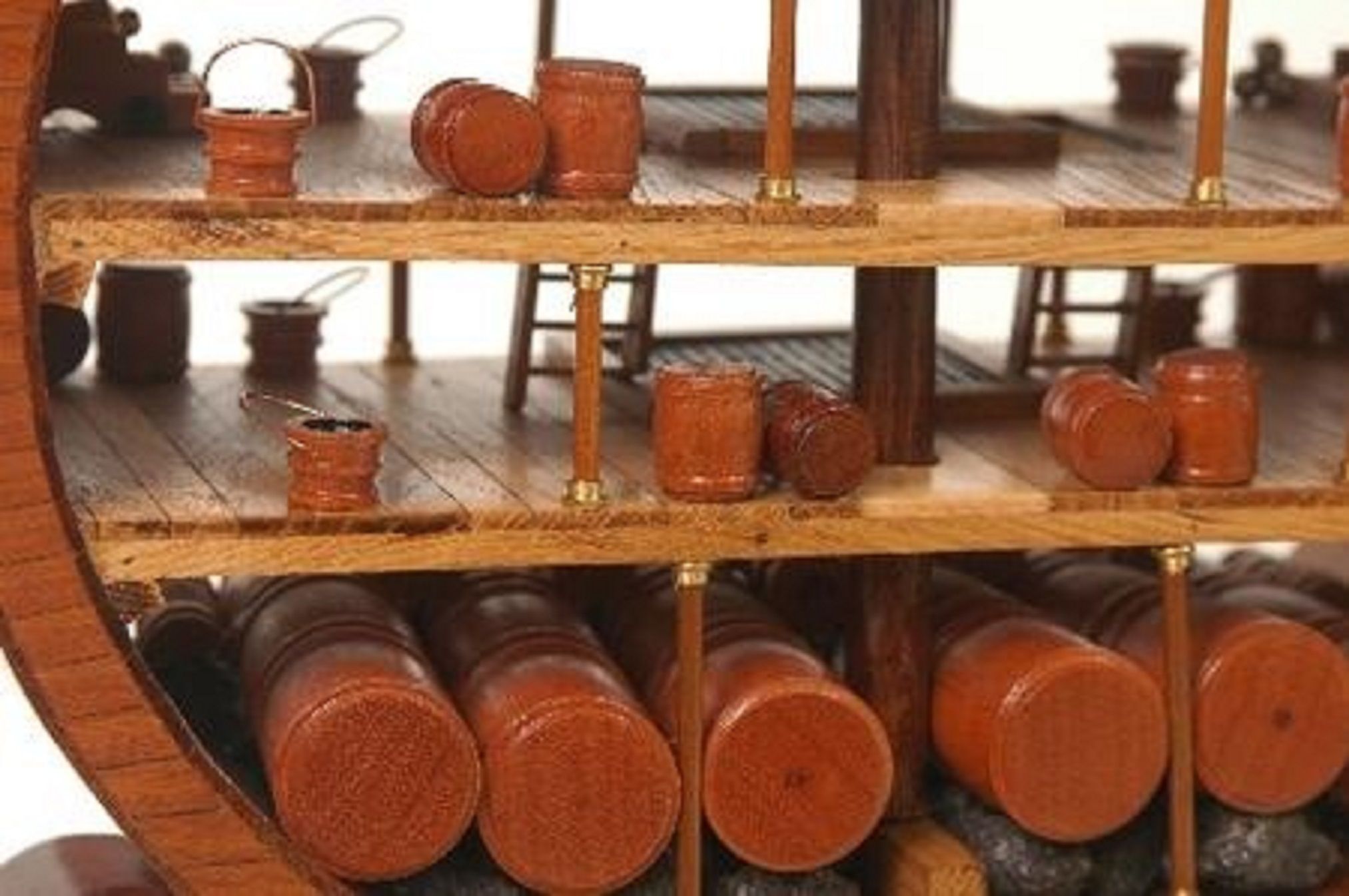
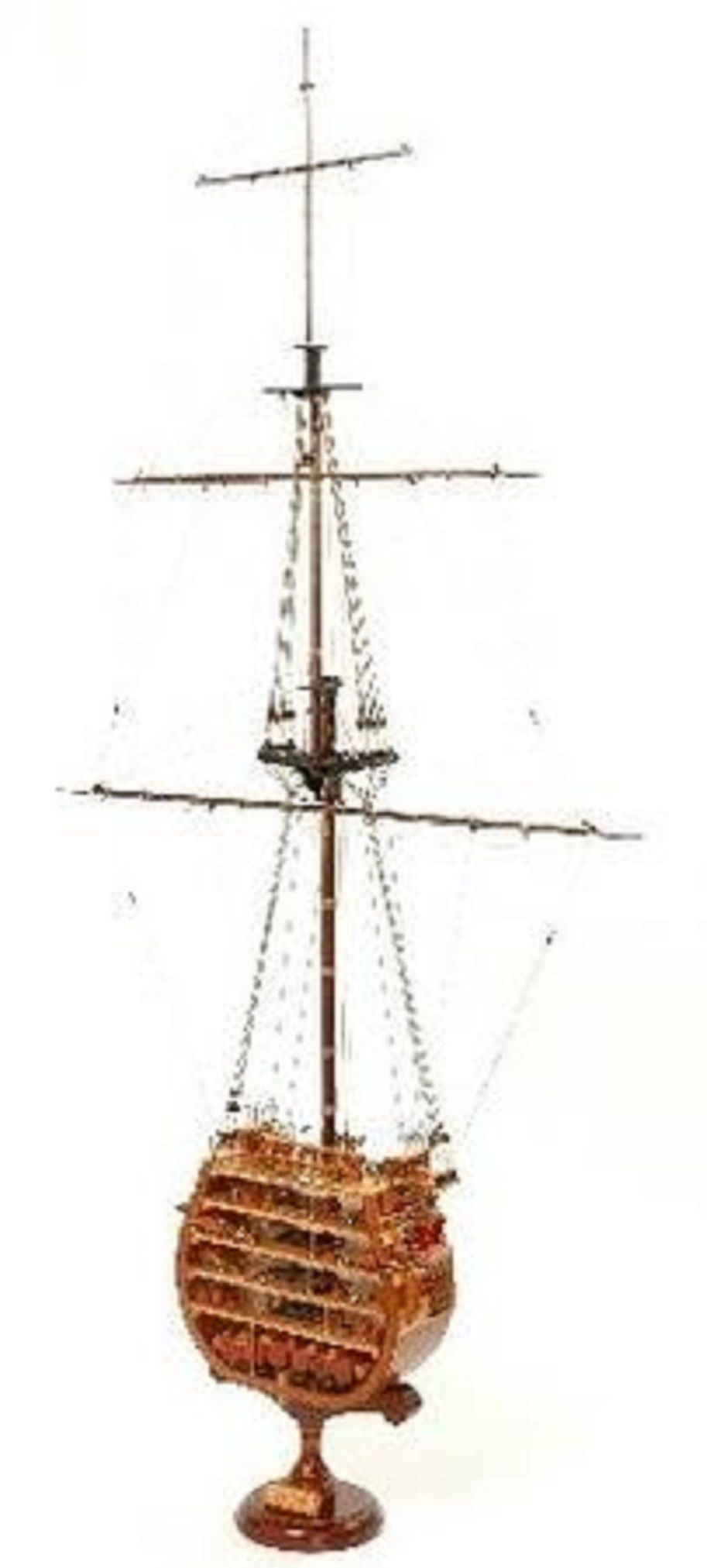
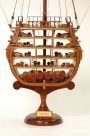
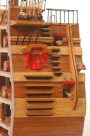
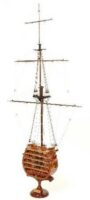
HMS Victory Cross Section in our Premier Range

One of the oldest warships of Britain?s Royal Navy, HMS Victory is most famous for being the flagship of Lord Nelson at the battle of Trafalgar. The historic ship was also associated with several other battles besides serving as a harbor ship, hospital ship and signal training centre during its service life. Currently preserved as a museum ship, the HMS Victory stands in dry dock at Portsmouth England.

The Journey of HMS Victory

The ship was ordered in 1758 and launched in 1765 but had to wait for 13 years before its commissioning for sea in 1778. The HMS Victory was made the flagship of Augustus Keppel?s Channel fleet. In July 1778, the ship took part in the indecisive battle of Ushant which was followed by its participation in the relief of Gibraltar as the flagship of Lord Howe. This was followed by a rest period of eight years in Portsmouth.

In 1792, the HMS Victory was made the flagship of Vice Admiral Sir Samuel Hood?s Mediterranean fleet which occupied Toulon besides capturing Bastia and Corsica. The ship was also part of the fleet which sailed in 1797 to intercept a large Spanish convoy guarded by 27 ships. The British fleet broke the Spanish line and inflicted lots of damage on the Spanish ships while capturing a number of vessels.

Participation in these battles was followed by reconditioning and reconstruction work which continued from 1800 to 1803. Following this, HMS Victory became the flagship of Lord Nelson?s Mediterranean Fleet. Napoleon was planning to invade Britain and Lord Nelson was asked to thwart such efforts. As the British lines approached the combined fleet of French and Spanish ships, Nelson uttered the famous words ?England expects that every man will do his duty.? During this war, Nelson was wounded and died but not before he successfully thwarted Napoleon?s efforts to capture Britain. HMS Victory sailed back to England with the body of Nelson.

After a reconditioning and some basic repairs in 1808, the HMS Victory re-entered service as the flagship of Sir James Saumarez?s Baltic fleet and remained in the Baltic until 1812. A symbol of the Royal Navy?s supremacy, HMS Victory is currently operating as a museum ship. This historic ship can be ordered for your homein various sizes, and there are other models available of modern ships or yachts at Premier Ship Models, a leading manufacturer of ready-to-assemble or ready to decorate model ships.

To view other exceptional models built to exact specifications, browse our many other products or please feel free to Contact Premier Ship Models for with any questions you may have.

Additional information
Volumetric Weight 21 kg
Length (cm)

7

Width (cm)

21

Height (cm)

161

Vessel Type

Ship of the line

Length (Inches)

3

Width (Inches)

8

Height (Inches)

63

Delivery & Returns
Delivery

We ship worldwide using FedEx, with tracking details provided once your order has been dispatched. Most model kits are delivered within 10-14 days if in stock, while handcrafted ready-made models may take 12+ weeks depending on production schedules. Due to the bespoke nature of ready-made models, staged payments may apply. Please inspect deliveries on arrival and report any damage immediately.

Returns

Standard models, kits and display cases can be returned within 14 days of delivery if unused and in original condition, with return shipping arranged by the customer. Faulty, damaged or incorrect items should be reported within 24 hours of delivery. Please note that bespoke and custom-made models are non-returnable and non-refundable once production has begun.

FAQs

A custom model ship is a bespoke model built entirely to your specification, replicating a specific design at a chosen scale and finish level. Depending on the type of design and your required timeline, our models are produced using a combination of traditional hand-crafting, 3D printing, CNC, and laser techniques – allowing us to deliver the best result for your project.

Custom models are popular with private collectors, yacht and boat owners, maritime businesses, shipping companies, and naval institutions. They’re also a distinctive choice for trade shows and events, corporate display pieces, and as memorable gifts – for example, gifting a client a scale model of their new yacht while it’s still being built is something we’ve helped make happen more than once.

Our custom model process runs from initial enquiry through to delivery, and is managed across three stages:

1. Enquiry Stage Get in touch with our sales team and we’ll assess your requirements – covering details such as the type and name of the subject, your preferred scale, number of models, quality level, delivery timescale, and budget. We’ll provide a formal quotation, and once agreed, an invoice is raised and a 50% deposit is taken to proceed.

2. Pre-Production Stage Our team works with you to complete a Model Maker’s Brief (MMB) – a detailed specification document that the model makers will build to. Where applicable, 3D renders are produced in black and white and then colour, with up to five revisions before sign-off. Please note that any changes requested after the MMB or renders have been signed off may result in additional costs.

3. Production Stage Our model makers construct your model to the agreed specification. You’ll be kept informed at key milestones through photos or video, and a 30% payment is collected at the 75% completion point. Once finished, your model is quality-checked against the MMB before being carefully packed and shipped. The remaining balance is collected prior to dispatch.

To get started, email us at sales@premiershipmodels.com and we’ll take it from there.

The more reference material you can provide, the better – photographs, technical drawings (in 2D or 3D) and builder’s plans all help us achieve the highest level of accuracy. That said, we can work from images alone if that’s all that’s available. Our team will guide you through exactly what’s needed during the initial consultation.

Lead times vary depending on the size, complexity, quantity, and budget involved. In most cases commissions take between 2 and 6 months, though highly detailed or large-scale pieces may take longer. For clients with tighter deadlines, faster turnarounds can sometimes be accommodated for – we’ve delivered commissions in as little as 3 weeks, though this is reflected in the cost. A clear timeline will always be confirmed as part of your quotation.

We can work to virtually any scale depending on your requirements and intended display space. Common scales include 1:50, 1:75, 1:100, and 1:200, but we’re not limited to these – our largest commission to date measured 4 metres in length. We’ll advise on what works best for your vessel, space, and budget.

Custom models are priced on a per-commission basis, reflecting the complexity, scale, detail and quantity required. Please contact us to discuss your requirements and we’ll prepare a tailored quotation.

Yes. We have experience producing models of historic, decommissioned, and heritage vessels. Provided sufficient reference material is available, we can work to recreate vessels to a high degree of accuracy.

Yes. A 50% deposit is required to commence work on a custom model. A further 30% is collected at the 75% completion stage, with the remaining balance due prior to dispatch. Full payment terms will be outlined in your formal quotation.

Yes. We keep clients informed throughout the commission, providing progress updates at key stages. Photographic updates are available on request for all commissions, and we can also arrange virtual meetings with our Production Manager for clients who would like a more hands-on view of progress.

The build method for a custom model depends on the vessel type, level of detail required, and your delivery timeline. We use a combination of traditional hand-crafting, 3D printing, CNC machining, and laser cutting to produce the best result for each individual commission. This flexible approach means we can work across a wide range of scales, complexities, and budgets without compromising on quality.

Our custom models are constructed from a combination of materials selected to best suit the subject and the level of detail required. For traditional vessel types, the hull and main structural components are typically built from wood – commonly Sapele or Teak – while masts, spars, and finer structural elements use a mix of wood and metal. Rigging is made from thread or cord, and smaller fittings such as cannons, anchors, and deck hardware are usually cast in metal or formed from resin. For subjects that demand the highest level of precision and detail, models may incorporate extensive CNC machining, laser cutting, and 3D printing – and in some cases may be constructed almost entirely using these methods. Display bases and name plaques are generally finished in wood with brass or metal hardware.

Scroll To Top
Shop
1 Wishlist
0 Cart

Login

Close
0
Select the fields to be shown. Others will be hidden. Drag and drop to rearrange the order.
  • Image
  • SKU
  • Rating
  • Price
  • Stock
  • Availability
  • Add to cart
  • Description
  • Content
  • Weight
  • Dimensions
  • Additional information
Click outside to hide the comparison bar
Compare