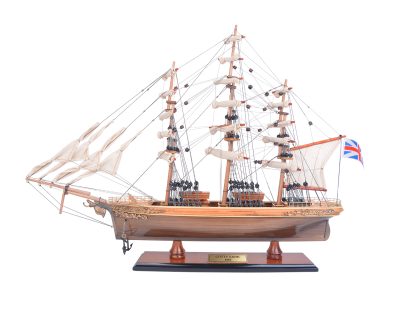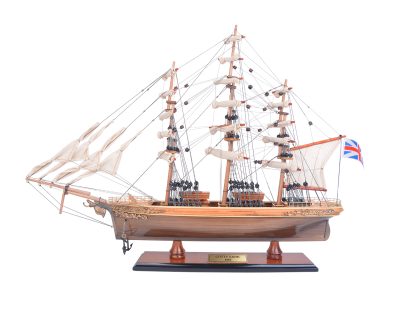















Home > Shop > Cutty Sark Tall Display Ship Model (Standard Range) – GN
Description

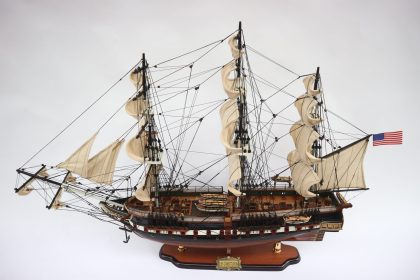
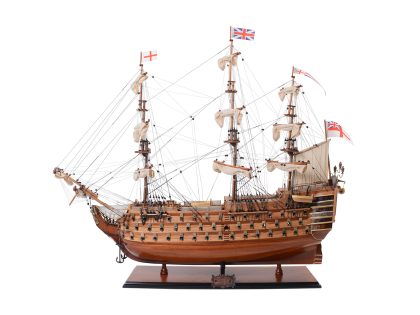
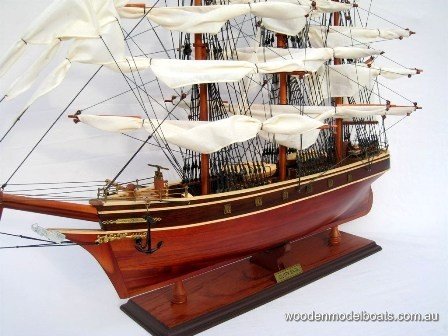
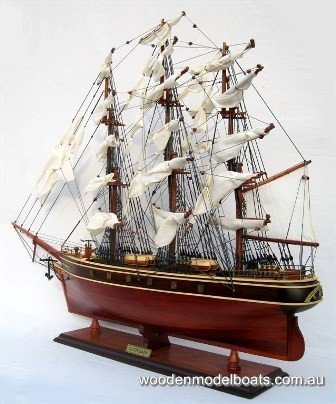
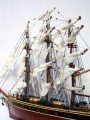
Handcrafted, scratch built and ready made Cutty Sark Model Ship

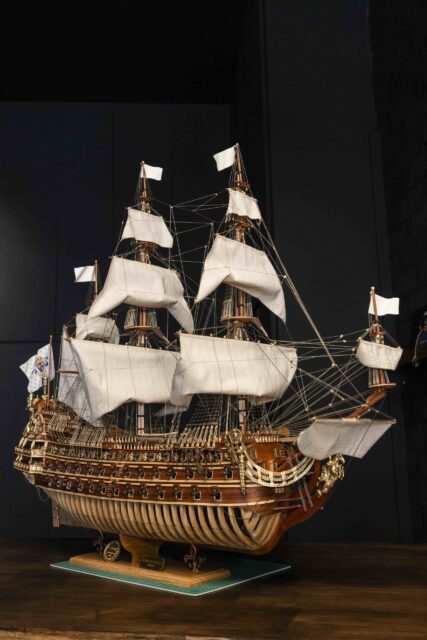
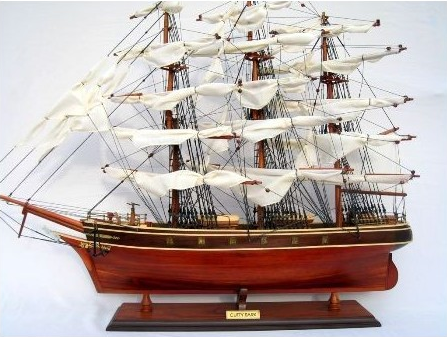
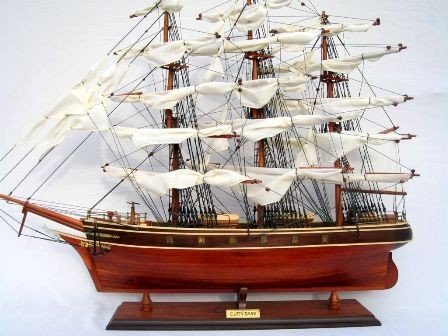
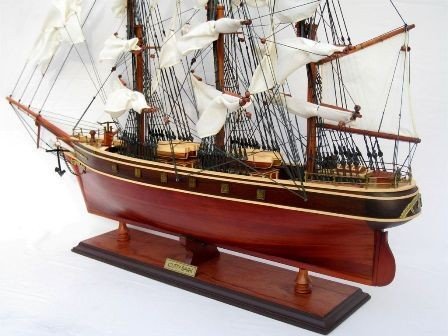
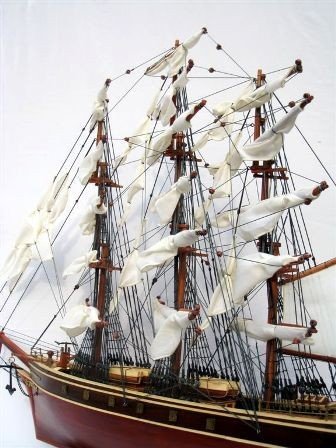
The Cutty Sark was a famous English tea clipper that was built in 1869 and originally used for the China tea trade. It was one of the last clipper ships built before the steam powered ships took over the route. The name Cutty Sark is derived from the poem Tam OShanter by Robert Burns and means short skirt in Scottish. Our Cutty Sark model ships are handcrafted and ready to display. Choose from models in our standard, premier and superior ranges in several sizes. The intricate designs of these vessels are perfect replicas down to the smallest detail for realistic models that make a perfect addition to any collection. The Cutty Sark makes a great gift. View the photographs of these model ships to see the beauty in the detail of the decks, hardwood fittings, brass rings, belaying pins, navigation lights, rudder hinges, chimney, mastheads, anchors, life rings, rigging line and much more.

These models are crafted from high quality African walnut and mahogany and cast metal. We offer a model ship kit for people who prefer to build their own model shops. We have chosen to feature models from the best quality brands, including Mantua, Billings Boats and Artesania for their exquisite quality models for the innovative designs, accurate and high quality materials and fittings. Browse our website to compare our quality Cutty Sark model ships, including ready to display museum quality models and model ship kits. Click on each model of the Cutty Sark to see the specifications of our hand crafted ship models to help you select the right model ship for your collection.

Among the most famous old sailing ships still extant, Cutty Sark was one of the last clippers built for the China tea trade. Ordered by Captain John Willis of London, her hull was of composite construction, with teak planking on iron frames. Cutty Sarks name is short Scottish for short shirt and comes from the Robert Burns poem Tam OShanter. The reason for his choice of name is not known. Willis insistence that only the finest materials be used in the construction of the Cutty Sark resulted in the bankruptcy of her original builders. Denny Brothers, who took over their yard, then oversaw her completion. Even though she lost one of her most dramatic encounters with her main rival, Thermopylae, she still acquired the admiration of London, for the persistence of her crew. She completed a 16,000-mile journey in one hundred and nineteen days, by no means an illustrious feat; the admiration was the inventiveness of her crew in building makeshift rudders twice, as she had lost her rudder in severe gales.

The advent of the steamships and the opening of the Suez Canal meant that clippers were no longer economic, and by 1878, clippers were out of the tea trade. A number of unfortunate accidents happened on board the ship between 1878 and 1883. These included a murder and one of her Captains (Captain Wallace) going mad and jumping overboard. In 1883 however, things were about to change for the clipper ship. She did the return journey from England to Australia (under Captain W. Moore) with a cargo of wool through the Cape of Good Hope in seventy-nine days. As with the tea trade, speed was also a critical factor for the wool trade. Richard Woodget, who became Cutty Sarks most celebrated master, succeeded Moore.

Her best run was in 1888, where she did the journey in sixty-nine days, shaving an amazing ten days off her previous record. She completed her last journey to Australia in 1895, and was sold to J. A. Ferreira of Lisbon. Four years later, she was again sold to the Cia de Navegacao de Portugal and was renamed Maria di Amparo.

Please browse our website or Contact Us for any more information in finding the perfect model ship for your collection.
Additional information
Volumetric Weight 50 kg
Length (cm)

70

Width (cm)

12

Height (cm)

65

Vessel Type

Clipper

Length (Inches)

28

Width (Inches)

5

Height (Inches)

26

Delivery & Returns
Delivery

We ship worldwide using FedEx, with tracking details provided once your order has been dispatched. Most model kits are delivered within 10-14 days if in stock, while handcrafted ready-made models may take 12+ weeks depending on production schedules. Due to the bespoke nature of ready-made models, staged payments may apply. Please inspect deliveries on arrival and report any damage immediately.

Returns

Standard models, kits and display cases can be returned within 14 days of delivery if unused and in original condition, with return shipping arranged by the customer. Faulty, damaged or incorrect items should be reported within 24 hours of delivery. Please note that bespoke and custom-made models are non-returnable and non-refundable once production has begun.

FAQs

A readymade model ship is a fully constructed, hand-finished wooden model – no building required. These are completed to a high standard and are ready to display straight from the box, making them ideal for collectors, interior decoration, and corporate gifting.

Our readymade range is crafted by specialist partners from around the world, each with decades of experience in the industry. Every model is hand-finished and inspected for quality before dispatch.

Readymade models are carefully packaged with protective materials to ensure safe transit. Larger or more delicate pieces may require additional packaging – full details on how we pack and deliver our models can be found on our Packing & Delivery page.

We take historical accuracy seriously. Our readymade models are produced with reference to authentic plans and historical documentation where applicable. Product listings include details on the vessel depicted and its provenance.

Yes. Our readymade range is well-suited to corporate environments, boardrooms, reception areas, and as premium gifts for clients or staff. We can also arrange custom nameplates or company branding on selected models, making them a genuinely personal and memorable gift or display piece. Please contact us to discuss your requirements.

Readymade models vary from compact desk pieces to large statement display models. Dimensions are listed on each product page. If you have specific size requirements, please contact us and we can help narrow down the options.

Selected models in our range come with a certificate of authenticity – in particular, models from our partner OMH include one as standard. For other models, provenance details are included in the product listing. If documentation is important to you, feel free to contact us before ordering and we’ll confirm what’s included with a specific piece.

Our readymade range covers a broad spectrum depending on the type and size of model. As a rough guide, J Class yachts start from around £100, historical ship models from around £200, and technical or working vessel models from around £300. Prices increase with scale, complexity, and craftsmanship, so there’s something available at most budgets. Exact pricing is listed on each product page.

Yes, ready-made models are covered under our standard returns policy. However, please note that any ready-made model that has been customised, for example with a ship name or bespoke branding, cannot be returned. Please see the Returns section of our Terms & Conditions for full details, or contact us if you have a specific concern.

If you’re looking for something specific that isn’t in our current range, a custom commission may be the right option. Get in touch with us to discuss your requirements and we’ll provide a quote – you can email us at sales@premiershipmodels.com or call us on 0208 447 1884.

Our readymade models are built by specialist artisan partners using a combination of traditional woodworking techniques and modern manufacturing methods, including CNC machining, laser cutting, and 3D printing. This blend of craftsmanship and technology allows for high levels of detail and consistency across our range. Every piece is inspected for quality before dispatch.

Our readymade models are constructed from a combination of materials depending on the model and manufacturer. The hull and main structural components are typically built from wood – commonly lime, walnut, or mahogany – while masts, spars, and finer structural elements use a mix of wood and metal. Rigging is made from thread or cord, and smaller fittings such as cannons, anchors, and deck hardware are usually cast in metal or formed from resin. Some components may also incorporate laser-cut or 3D-printed parts where precision detailing is required. Display bases and name plaques are generally finished in wood with brass or metal hardware.

Scroll To Top
Shop
1 Wishlist
0 Cart

Login

Close
0
Select the fields to be shown. Others will be hidden. Drag and drop to rearrange the order.
  • Image
  • SKU
  • Rating
  • Price
  • Stock
  • Availability
  • Add to cart
  • Description
  • Content
  • Weight
  • Dimensions
  • Additional information
Click outside to hide the comparison bar
Compare